


3 systems
Every listing update had to be manually re-entered across the CRM, website, and Rightmove
1
post-launch fix in 3 months
3 → 1
systems consolidated into one platform
180+
enquiries handled since launch
West One Lettings had built their digital presence organically as the business grew, with separate websites for student accommodation, residential lettings, and commercial properties, each maintained independently. It had become a pain to manage.
Property data had to be manually re-entered across their CRM, website, and Rightmove every time something changed. There was no consistent brand experience across the three audiences and no room to grow without adding more admin overhead.
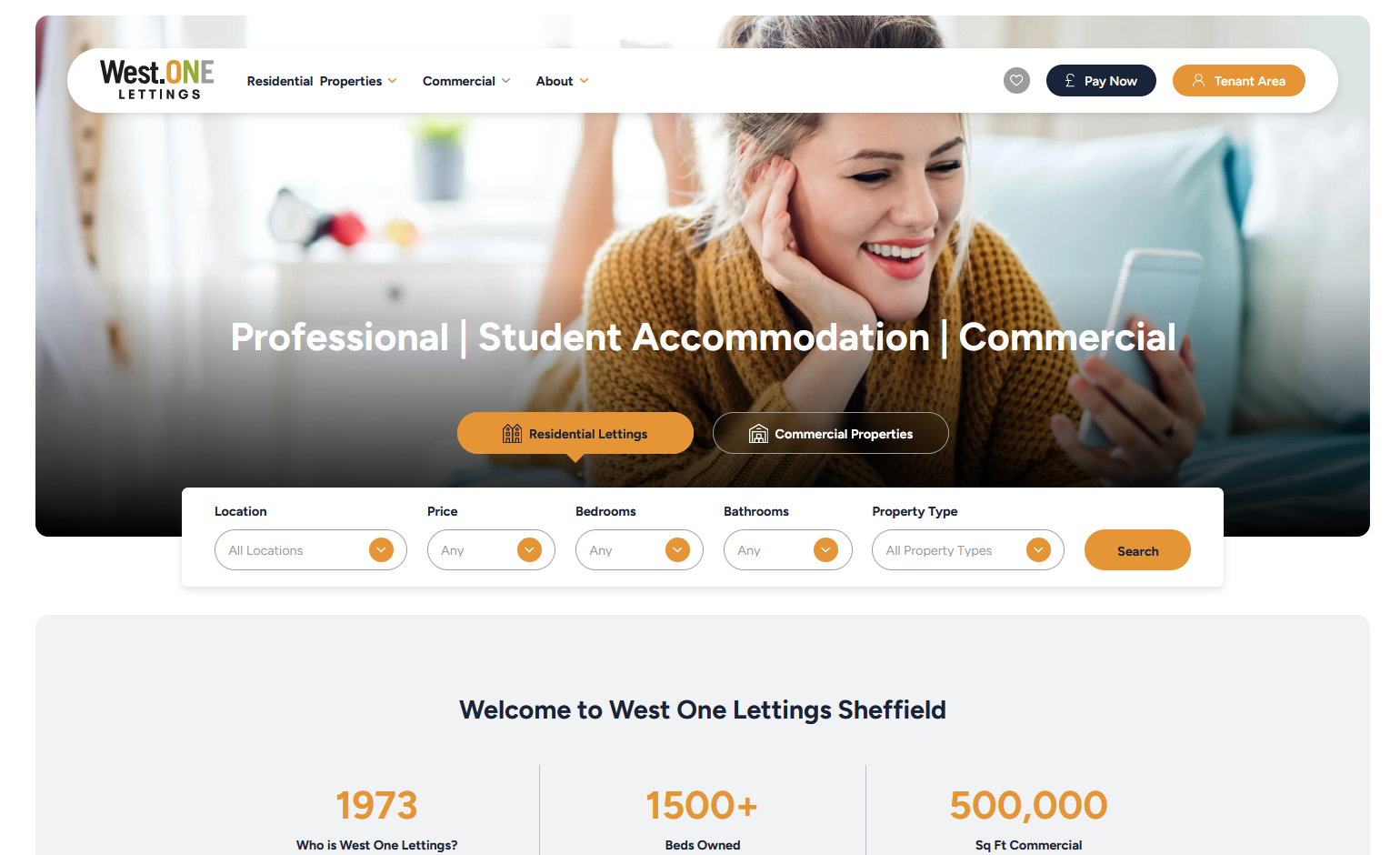
The new platform needed to talk to their CRM, push listings automatically to Rightmove, and serve three distinct audiences – all under a single unified brand that the internal team could manage themselves.
Every listing update had to be manually re-entered across the CRM, website, and Rightmove
Properties now flow automatically from the CRM, no manual re-entry required
The central problem was time. Property data was being manually re-entered across three separate systems every time something changed; the CRM, the website, and Rightmove. We integrated Property Hive as the bridge between West One’s I Am Property CRM and the website, enabling listings to flow automatically from the CRM into the site and push directly to Rightmove without any manual intervention. What had been a daily, error-prone task became a system that largely runs itself.
Where integrations had limitations (Property Hive didn’t offer an out-of-the-box UniHomes feed) we were upfront early, explored alternatives, and built practical workarounds rather than overpromising.
West One needed a platform that could handle three separate property audiences; students, professionals, and commercial tenants, each with different search criteria, content structures, and pricing formats, all under a single unified brand. No template solution could do that without significant compromise. We built from the ground up, giving West One full ownership of the codebase and long-term independence from any platform they didn’t control.
One of the more interesting challenges was routing three very different visitors from the same homepage without confusion. The solution was a user-type selection above the main search; students, professionals, or commercial, which immediately routes each visitor into the right experience. Student properties show price per person per week. Professional listings show monthly rent. Commercial properties filter by size and type. Each journey feels purpose-built because it is.
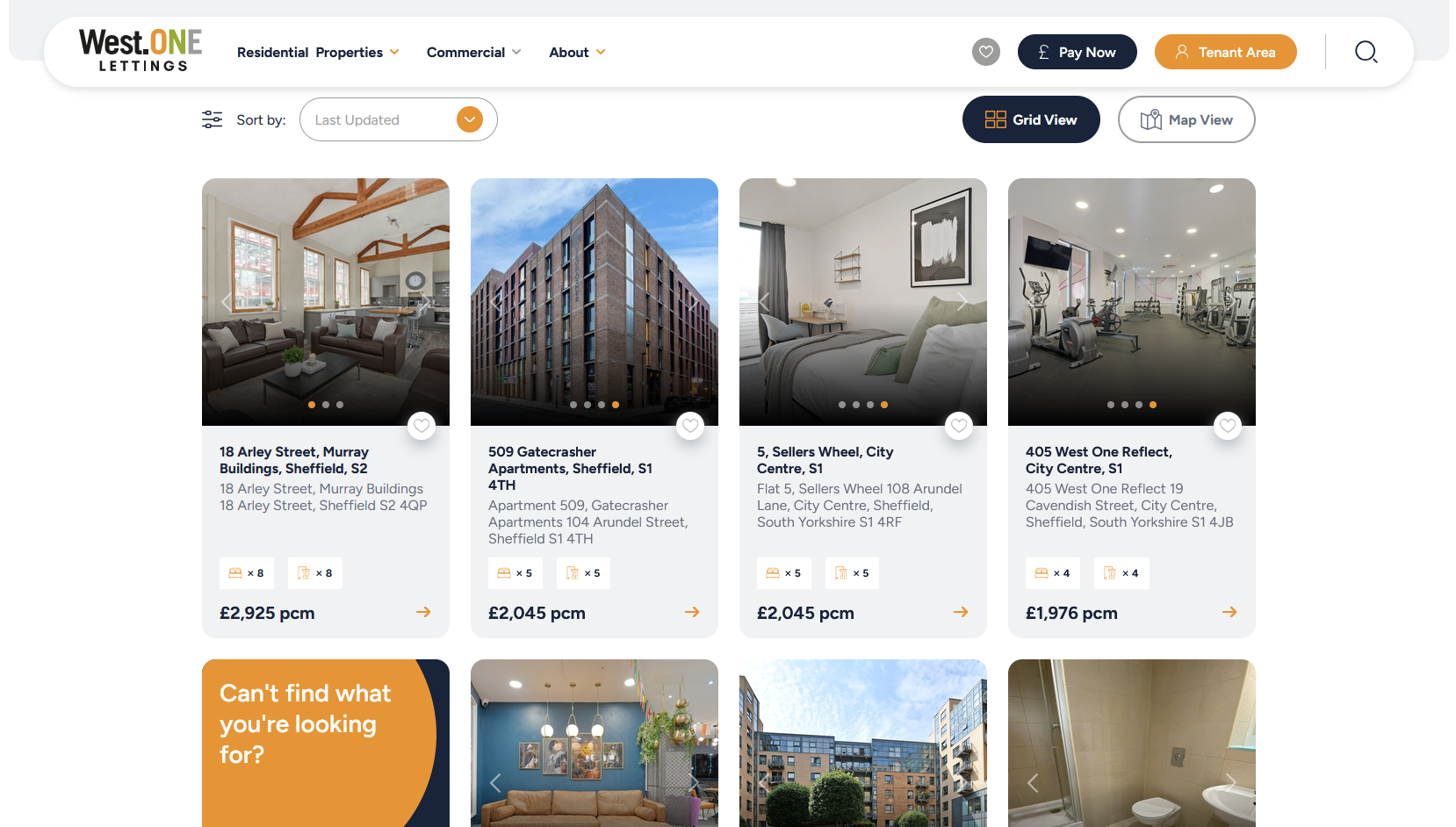
The new platform launched and the team took to it quickly. Property management that previously required manual duplication across three systems now runs automatically. The internal team can create and edit pages, manage listings, and maintain brand consistency without any development support.
Post-launch, only one issue required a fix in the first three months – that’s a meaningful indicator of build quality and the thoroughness of testing before go-live. The reduced aftercare burden freed the team to focus on growth rather than maintenance.
West One have since opened the door to further development work, which is how we think every client relationship should go. The launch is the beginning, not the endpoint.
If your team is spending hours manually updating listings across multiple systems, there’s a better way.
We work with property businesses to automate the repetitive stuff – so your team can focus on letting properties, not managing spreadsheets.