Meta Ads, whether on Facebook or Instagram, remain one of the most powerful tools for reaching and converting audiences online.
Facebook Business has become a go-to tactic for entrepreneurs worldwide. All it takes is creating a page, opening the Facebook Ads Manager, and launching campaigns that can reach millions of users across Meta’s ecosystem.
However, many business owners quickly discover that running Meta Ads involves a lot of testing, learning, and refining, especially at the start. Expectations are often high, every penny invested is expected to deliver results, but the reality is that success comes with strategy, patience, and avoiding common mistakes.
While the platform offers huge potential, many businesses waste ad spend and miss opportunities simply because of avoidable errors. In this guide, we’ll walk through the five most common Meta Ads mistakes we see marketers make — and how to fix them so your campaigns deliver stronger results.
Why Meta Ads Strategy Often Falls Short
Running ads on Meta isn’t just about setting a budget and pressing “go.” A strong strategy depends on aligning objectives, targeting, creative, tracking, and optimisation to achieve meaningful outcomes.
When campaigns underperform, it’s rarely because the platform doesn’t work, it’s usually due to a few simple errors that compound over time. These mistakes often lead to wasted budget, poor engagement, low conversion rates, and a lack of actionable insights.
Let’s break down the five key pitfalls, and what to do instead.
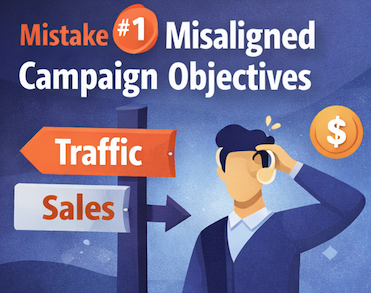
Mistake #1: Misaligned Campaign Objectives
One of the most common mistakes advertisers make is choosing the wrong campaign objective. It might seem like a small step, but this decision dictates who sees your ads and how the algorithm optimises delivery.
For example, if your goal is conversions, but you select traffic as your objective, Meta will deliver your ads to people more likely to click rather than buy. That means lower-quality leads, fewer sales, and wasted spend.
A poorly chosen objective can compromise the entire campaign, no matter how good your targeting or creative assets are.
How to fix it:
- Clearly define your business goals before launching a campaign.
- Match the campaign objective to your primary goal — traffic for awareness, conversions for sales, leads for form fills, etc.
- Don’t be afraid to use A/B testing with different objectives to see what aligns best with your funnel.
Mistake #2: Poor Audience Targeting or Over-Narrowing
Many advertisers skip this critical audience research stage and rely on guesswork, which often leads to poor performance.
Even the most strategic campaigns won’t work if your ad creative fails to capture attention. Low-quality visuals, generic headlines, and weak calls to action often result in low CTR and poor engagement.
Another common issue is using too many creatives in one ad set. Testing multiple ads is smart, but overloading an ad set with creatives can backfire. If there are too many variations, Meta’s algorithm won’t have enough budget or delivery opportunities to properly optimise them.
The best-performing structure usually involves three to five creatives per ad set. This gives the algorithm enough data to identify and prioritise winners. Poor-performing creatives should be switched off to make room for fresh, better-optimised ads.
Meta is a highly visual platform, so your ad needs to stand out in a crowded feed.
How to fix it:
- Conduct proper audience research before launching your campaigns. Analyse website data, CRM insights, and previous performance.
- Use first-party data to build high-quality Custom Audiences.
- Test broad targeting with layered interests or lookalikes to find the sweet spot.
- Avoid overly narrow criteria that restrict reach and increase CPM.
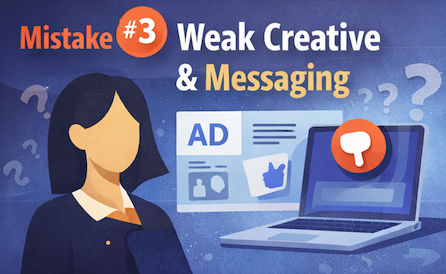
Mistake #3: Weak Creative and Messaging
Even the most strategic campaigns won’t work if your ad creative fails to capture attention. Low-quality visuals, generic headlines, and weak calls to action often result in low CTR and poor engagement.
Another common issue is using too many creatives in one ad set. Testing multiple ads is smart, but overloading an ad set with creatives can backfire. If there are too many variations, Meta’s algorithm won’t have enough budget or delivery opportunities to properly optimise them.
The best-performing structure usually involves three to five creatives per ad set. This gives the algorithm enough data to identify and prioritise winners. Poor-performing creatives should be switched off to make room for fresh, better-optimised ads.
Meta is a highly visual platform, so your ad needs to stand out in a crowded feed.
Tips for better creative performance:
- Use high-quality, brand-consistent images or videos.
- Craft a clear, benefit-driven headline and CTA.
- Test multiple formats (carousel, Reels, static image, video) to see what resonates with your audience.
- Keep the number of creatives per ad set limited for optimal learning.
- Refresh creatives regularly to avoid ad fatigue.
Mistake #4: Neglecting Tracking, Data & Conversion Events
Without accurate tracking, you’re flying blind. Many advertisers fail to properly install or configure the Meta Pixel, set the right conversion events, or monitor performance in real time.
This makes it almost impossible to measure return on ad spend (ROAS), optimise campaigns, or scale effectively.
Without accurate tracking, you’re flying blind. Many advertisers fail to properly install or configure the Meta Pixel, set the right conversion events, or monitor performance in real time.
The Meta Pixel is a snippet of code added to your website that tracks user actions after they click on your ads. This is crucial for two main reasons:
- It shows which ads are driving real conversions.
- It allows you to retarget audiences based on specific actions like add-to-cart, view content, or initiate checkout.
If your Pixel isn’t set up correctly, Meta won’t be able to pull reliable data from your website, and you’ll lose valuable insights for optimisation.
How to fix it:
- Ensure your Meta Pixel is installed correctly and firing on all relevant pages.
- Define key conversion events that align with your business goals.
- Use UTM parameters to track traffic in Google Analytics.
- Regularly check your Events Manager for errors or low-performing events.
- Follow Meta’s setup best practices to avoid common mistakes.
Mistake #5: Skipping Optimisation and Testing
Launching a campaign is just the beginning. If you set it and forget it, performance will decline over time. Many businesses skip ongoing Meta ads optimisation, testing, and iteration, which are essential for maintaining strong results.
The Meta algorithm thrives on fresh data and continuous refinement. Regular testing helps you identify top-performing creatives, audiences, and formats — giving you the confidence to shift budget strategically and scale results.
A practical testing workflow:
- Run A/B tests on audiences, creatives, and ad copy.
- Monitor performance during the learning phase, but allow the algorithm time to optimise.
- Refresh creatives regularly to avoid fatigue and declining CTR.
- Adjust budgets gradually to maintain campaign stability.
Putting It All Together: A Smarter Meta Ads Strategy
When you avoid these five mistakes, you give Meta’s algorithm a better chance to work for you, not against you. By aligning objectives, refining targeting, strengthening creative, tracking performance, and optimising consistently, you build campaigns that don’t just generate clicks, they drive real business results.
Successful advertisers know that Meta Ads is not a one-time setup but a continuous process of learning, testing, and improving.
Ready to Improve Your Meta Ads Performance?
At Arise, we don’t just run Meta Ads, we make them work smarter. Our Paid Social experts have experience managing campaigns across industries, from lead generation to ecommerce. We focus on what matters: strategy, creative excellence, and measurable results.
Get in touch with us to supercharge your Meta Ads strategy and turn your ad spend into real growth.