Google has just published its first official guide to optimising for generative AI features in Search, and the SEO world has predictably gone into a spin about what it means. Some are calling it a fundamental shift. Others are using it to sell entirely new optimisation frameworks with new acronyms. Most of it is noise.
Here is what the guide actually says, what it definitively debunks, and what it means for small businesses trying to stay visible as Google Search evolves.
What Google Actually Published
The guide, titled “Optimizing your website for generative AI features on Google Search”, is Google’s first consolidated document specifically addressing how to show up in AI-powered search features, including AI Overviews and AI Mode.
It is important to understand the context in which this guide lands. As of March 2026, 48% of Google searches already display an AI-generated answer at the top of the page, up from 34.5% in December 2025. AI Mode, which was experimental until recently, is now available to most US users. The stakes around visibility in these features are real and growing.
But the guide’s central message is not what many people expected.

The Headline: SEO Is Still SEO
The most significant thing Google says in this guide is the most overlooked. Right at the top, Google answers the question that everyone is asking: is SEO still relevant for generative AI search?
The answer is yes, and the reason matters. Google’s AI features, including AI Overviews and AI Mode, do not run on a separate index or use a separate ranking system. They draw from the same Search index that classic Google Search has always used, through two core mechanisms: Retrieval-Augmented Generation (RAG), where the AI grounds its responses in documents retrieved from the existing index, and Query Fan-Out, where a single search query is automatically expanded into multiple related sub-queries to gather a broader range of relevant pages.
The practical implication is direct. A page needs to be indexed, crawlable and eligible to appear with a snippet in Google Search to even be considered for AI features. There is no parallel route in. A Brainlabs study found that 96 percent of links appearing in AI Overviews came from websites already ranking in the top 10 organic results. The path to AI visibility runs through conventional SEO, not around it.
If you want to understand what good SEO actually involves before layering AI considerations on top of it, our post on what SEO really involves covers the fundamentals in plain language.
The Headline: SEO Is Still SEO
The most significant thing Google says in this guide is the most overlooked. Right at the top, Google answers the question that everyone is asking: “Is SEO still relevant for generative AI search?”
The answer is yes, and the reason matters. Google’s AI features, including AI Overviews and AI Mode, do not run on a separate index or use a separate ranking system. They draw from the same Search index that classic Google Search has always used, through two core mechanisms: Retrieval-Augmented Generation (RAG), where the AI grounds its responses in documents retrieved from the existing index, and Query Fan-Out, where a single search query is automatically expanded into multiple related sub-queries to gather a broader range of relevant pages.
The practical implication is direct. A page needs to be indexed, crawlable and eligible to appear with a snippet in Google Search to even be considered for AI features. There is no parallel route in. A Brainlabs study found that 96% of links appearing in AI Overviews came from websites already ranking in the top 10 organic results. The path to AI visibility runs through conventional SEO, not around it.
What Google Explicitly Debunked
This is where the guide gets genuinely useful, because it directly names several tactics that have been widely promoted in the SEO industry and says they are not necessary.
AEO and GEO are not separate disciplines
Google defines “Answer Engine Optimisation” and “Generative Engine Optimisation” directly and then states: “From Google Search’s perspective, optimising for generative AI search is optimising for the search experience, and thus still SEO.” Any agency or consultant selling you a separate AEO or GEO strategy as something distinct from good SEO practice is selling you something Google itself says you do not need.
llms.txt files do not help
A proposal called llms.txt has been circulating as a way to signal to AI systems how to read your content, similar to how robots.txt works for crawlers. Google is explicit: it does not read llms.txt in any special way. The crawler can discover it like any other file but assigns it no meaning for AI feature inclusion.
Content chunking is not a ranking strategy
Some AI search advice has recommended breaking content into very short, discrete paragraphs to make it easier for AI systems to extract and cite. Google says its systems understand multi-topic pages and know how to extract relevant passages without the author pre-fragmenting the content. There is no ideal page length, and optimising for “the chunk” often produces thin content that loses editorial value without gaining any visibility.
Structured data is not required for AI features
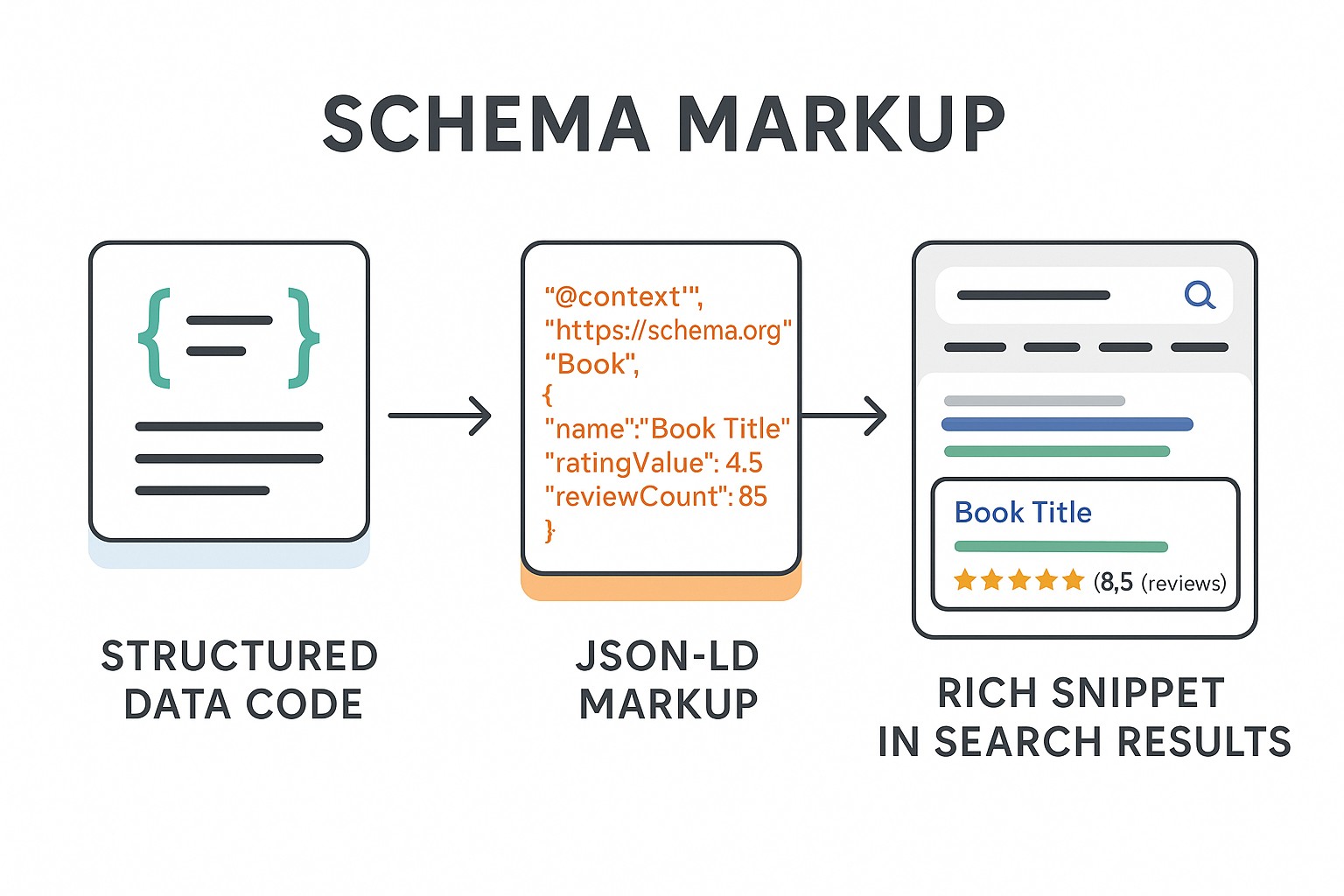
The guide confirms there is no special schema.org markup needed to appear in AI Overviews or AI Mode. Structured data remains useful as part of an overall SEO strategy for rich results, but it is not a specific lever for AI feature inclusion.
Creating separate pages for every long-tail variation is counterproductive
Google explicitly warns that trying to cover every possible variation of how someone might search, by creating individual pages for each variation, risks falling into what it calls “scaled content abuse.” The framework rewards a small number of strong, comprehensive pieces over hundreds of thin pages.
What the Guide Emphasises Positively
The guide is not just a list of things to stop doing. It is clear about what it wants to see more of.
Non-commodity content
This is the concept Google pushes hardest. Commodity content is the generic, repackaged version of what already exists everywhere online. Google contrasts “7 Tips for First-Time Homebuyers” with “Why We Waived the Inspection and Saved Money: A Look Inside the Sewer Line.” The difference is whether the content offers something that could not simply be synthesised from existing sources. AI systems are very good at compressing common knowledge. If your page only restates what is already everywhere, you give the system less reason to feature you as a distinct source.
E-E-A-T signals
Experience, Expertise, Authoritativeness and Trustworthiness remain central to how Google evaluates content quality. In an AI search context, this means content that demonstrates genuine firsthand knowledge, clear authorship from credible sources, and external signals of trust and authority. Author pages, clear sourcing and a track record of reliable information all contribute.
Technical health
All existing technical SEO best practices continue to apply. The page must be crawlable and indexable. JavaScript SEO best practices should be followed where relevant. Page experience matters. Duplicate content should be reduced. The technical foundations determine whether a page is even eligible to appear.
Supporting content with images and video
Google notes that AI features can bring in relevant images and video, creating additional opportunities for visibility beyond web page links. Where it makes sense to support text with high-quality visual content, doing so continues to be worthwhile.

What This Means for Businesses
The honest interpretation of this guide is that it does not require a fundamental change of direction for businesses that have been following sound SEO practice. It does, however, clarify where the emphasis should sit.
The most actionable shift is away from volume-led content strategies and towards fewer, more genuinely useful pieces. If your business has been producing a high volume of thin, keyword-focused blog posts, the guide is a clear signal to stop. One comprehensive, well-researched piece that draws on real experience and expertise will outperform ten generic articles on adjacent topics, both for traditional rankings and for AI feature inclusion.
The second practical shift is towards demonstrating real expertise. For local service businesses in particular, this means content that reflects genuine knowledge of your sector, your location and your clients’ actual questions. Not content that could have been written by anyone about anything, but content that is clearly rooted in specific, verifiable experience. Our post on how to optimise your blog posts for search engines covers the practical side of this in more detail.
The third is technical maintenance. Ensuring your site is crawlable, indexed correctly and free of the kinds of technical issues that prevent Google from accessing your content cleanly remains as important as ever. If your site has technical problems, no amount of content strategy will compensate for them. Our SEO services cover both the technical and content sides of this.
The Bigger Picture
There is a tension at the heart of this guide that Google does not fully resolve. On one hand, it says SEO fundamentals are the path to AI visibility and good content still drives traffic. On the other hand, data shows that 93% of AI Mode sessions end without a visit to any source website. Google’s own Head of Search acknowledged in early 2025 that the search bar would become “less prominent over time.”
The honest position is that the search landscape is genuinely shifting in ways that will reduce organic click volume for many queries over time, particularly informational ones where AI can answer the question directly. The guide is Google saying that the best response to this shift is not a new technical framework but a focus on the kind of content and authority that makes a site worth citing. That is broadly true, and it is the right direction.
What it does not fully address is the economic reality for publishers who have historically relied on informational traffic as a top-of-funnel channel. That is a longer conversation, and one that goes beyond what any optimization guide can resolve.