








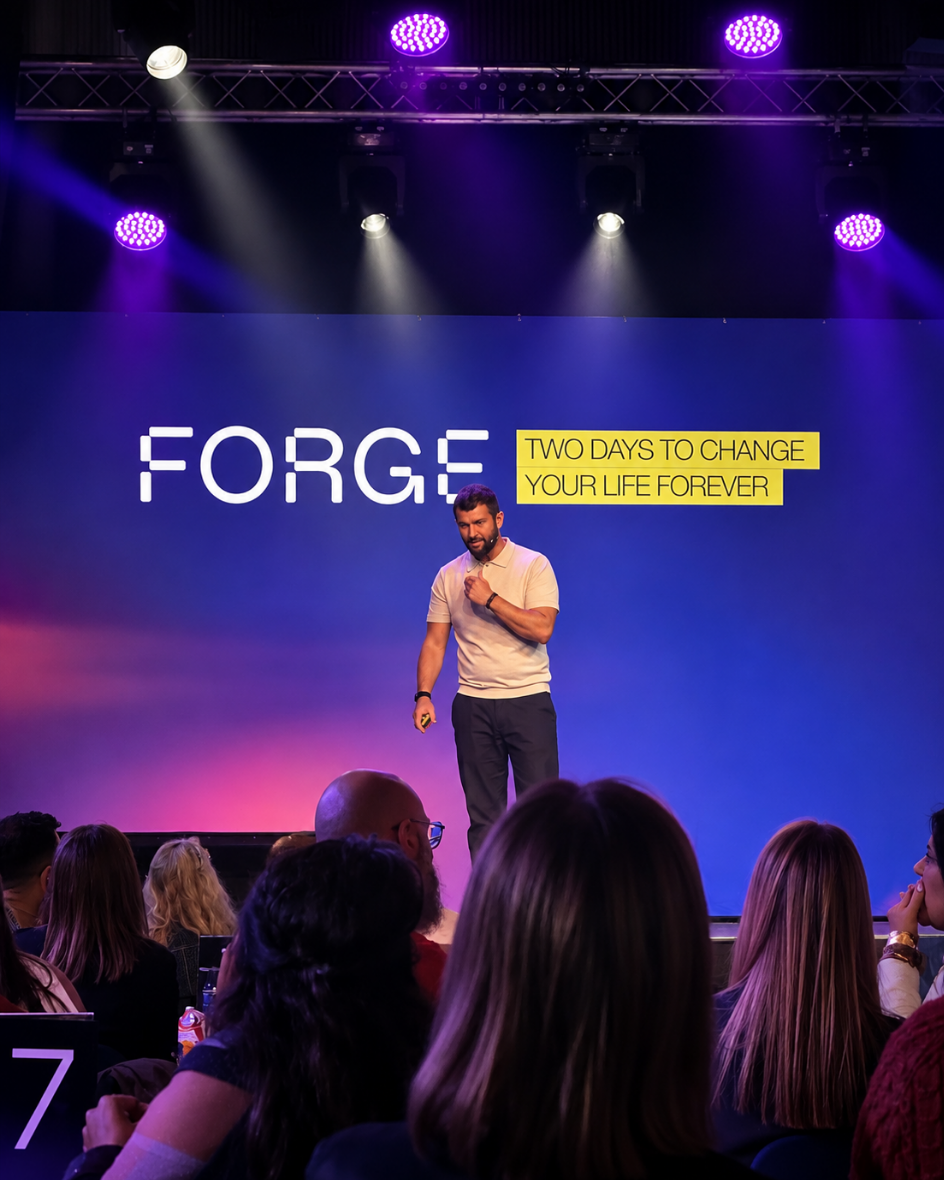
Our team spent two days at FORGE Sheffield, and came back with some genuinely useful ideas and frameworks, the kind that we can put into practice right away. Luisa Lusuardi and Daniel Evison have put together a recap of what stood out across both days, and what it means for how we work and how it can impact our delivery and clients.
Day 1
Prof Steve Peters – How to Become the Master of Your Mind
Professor Steve Peters is a psychiatrist and the author of The Chimp Paradox, a psychological framework that uses the metaphor of an inner ‘chimp’ to help people understand and manage their emotional responses. His talk was focused around how we respond when things go wrong.
Our key takeaway: “It is what it is – what’s the plan?”.
It’s a simple enough point, but when you think more about it, it’s a really powerful one. When something doesn’t go to plan, which it often doesn’t, our normal instinct is to give up, or focus on the negative. Steve’s point is that the dwelling changes nothing, and what really matters is the next step.
He followed this up with: “Will it matter in a week?” Again, a gentle reframe. Zoom out, focus on what’s next and how to keep moving forwards.
What this means for how we work:
This talk was a decent reminder to think about how we handle challenges both internally and externally before reacting. If we start with questions and a broad view of things before jumping to action, it’s going to give much better results. For our clients, that means more measured, considered responses when performance dips, rather than ‘Chimp’-led, emotional, reactive pivots that have the potential to do more harm than good.
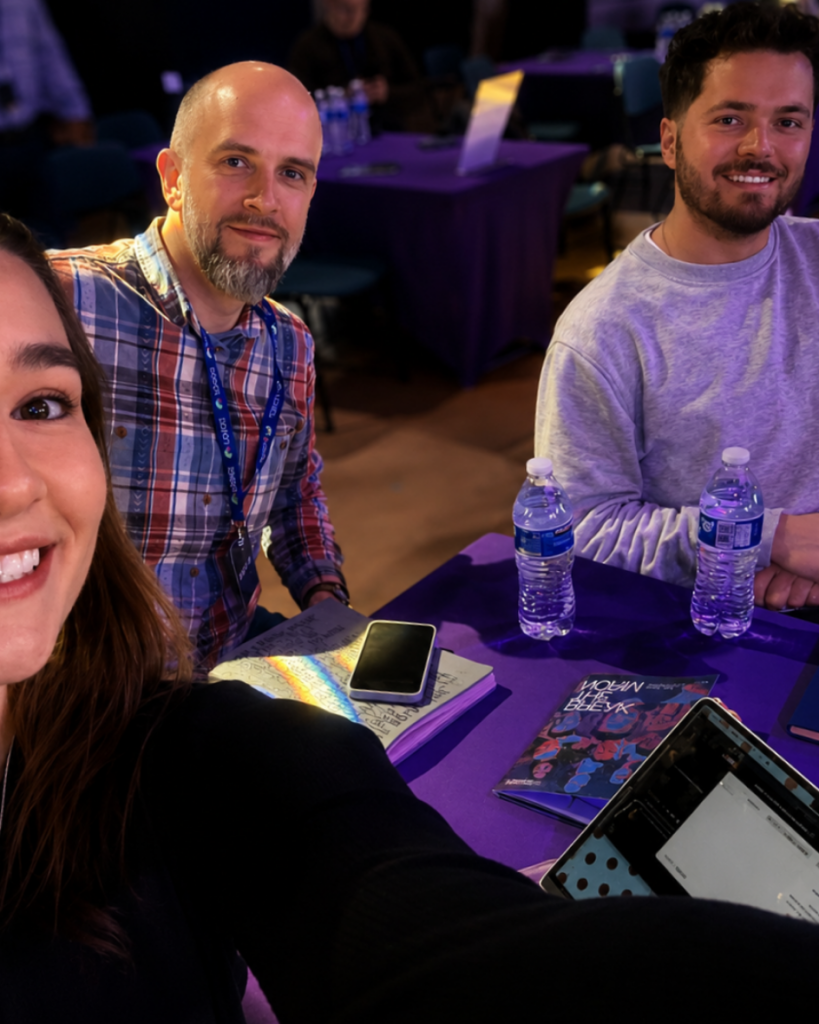
Carrie Rose – How to Increase the Performance of Your Marketing
Carrie Rose is co-founder and CEO of Rise at Seven, a large UK & US-based SEO and content agency. Her talk cut straight to a shift that’s reshaping how marketing, especially search, actually works, and where we’re heading.
Our key takeaway: Chase people, not algorithms.
Algorithms change constantly, it’s something we’re extremely aware of, especially working in search and social, and often as marketers, we’re constantly trying to keep up. But strategies built around gaming these platforms tend to have a short shelf life. Carrie instead talked about strategies that are built around genuine human demand, not just what the algorithm is pushing that day.
She spoke about creating demand first, then being visible for it. So, rather than targeting just people who already know what they’re looking for, the goal here would be to shape the conversation before the search even happens.
She also spoke interestingly about the mix of platforms used during people’s research phase. By the time someone runs a search, they’ve often already done a significant amount of discovery, and if your brand isn’t showing up in that earlier stage, you’re fighting for a much smaller slice of attention. Most buyers will move across 3-6 platforms before making a decision, which makes multi-channel visibility a must.
What this means for how we work:
Carrie’s talk reinforced something we’re already building into our client strategy, a broader view of search and visibility that goes beyond a single channel. We’re looking more closely at how we can help clients show up at the demand-creation stage, not just the conversion stage, across multiple platforms.
Damian Hughes – Unlocking the DNA of High-Performing Culture
Damian Hughes is a bestselling author and change psychology expert who works at the intersection of elite sport and business. His session focused on what separates high-performing teams from the rest.
His session focused on some important points and asked some fairly simple questions:
- What can go wrong? Anticipate the obstacles before they arrive
- How do we deal with them? Build the response before you need it
- Build on what actually exists, not on what you wish existed
- What are we already proud of? Start from a foundation of genuine strength
What this means for how we work:
Honest foundations beat polished aspiration. Whether we’re building a marketing strategy or working through a client challenge, starting from what’s real, rather than what looks good on a slide, tends to produce better outcomes.
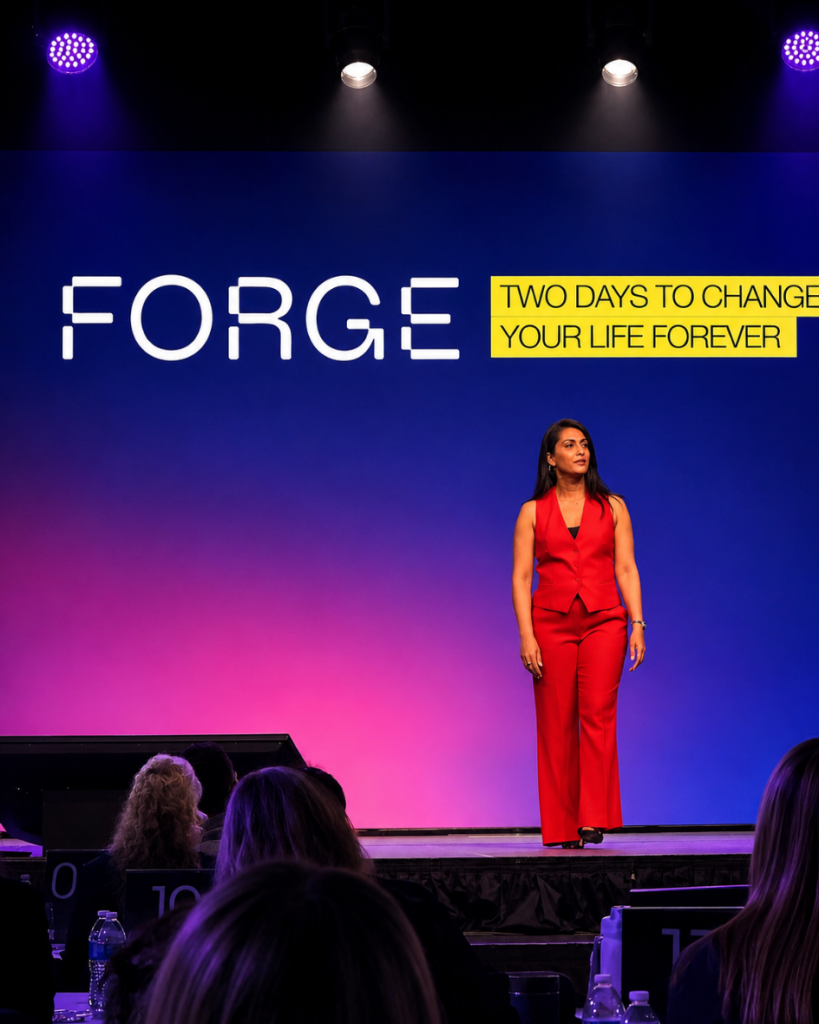
James Burke – Marketing That Works: How to Get Predictable Leads
James Burke is a business coach and author of Marketing That Works. During his session, James laid out what he calls the Reverse Marketing Method, a framework for removing the guesswork from lead generation.
It works like this:
- Identify your target market, specifically. Start with the smallest viable market per campaign. Not “SMEs” or “hospitality businesses”, but a more defined, reachable group with a shared problem. A memorable line here: “Presumption is the mother of all f**k ups.” Don’t assume you know who your buyer is. Test it.
- Do real market research. What challenges are they actually facing right now? What would they say their goals are today? Talk to people. Read reviews. Stop guessing.
- Build your offer ladder. Low-threshold offer: free, simple, low-commitment. What quick win can you offer? High-threshold offer: audit, webinar, consultation. Direct offer: the core product or service.
- Choose your vehicle. Which platform? Where does your audience actually spend time? Measure daily activity. Identify what’s moving the needle, and do more of that.
Then finally, sharpen it until it sings. Test. Measure. Refine. Again and again.
What this means for how we work:
The Reverse Marketing Method maps closely to how we approach campaign planning for clients, but this session sharpened our thinking on offer structure and market specificity. The reminder to start narrow, validate, and then scale is one we’re taking back into client briefs. To keep testing, keep measuring and refining our outputs.
Marcus Sheridan – How to Build Trust With Your Teams
Marcus Sheridan is a globally recognised communication expert and the author of They Ask, You Answer, a book that’s directly influenced the way we approach content strategy at Arise. So hearing him speak in person, twice, was a genuinely amazing experience.
This session focused not on content, but on communication, specifically the difference between telling and asking.
His framework is built around four moves:
- “Yes, and…” – build on what’s been said before redirecting
- Question first – lead with curiosity before judgement
- Pushback first – name the challenge before proposing the solution
- “Tell me more” – the simplest tool for creating psychological safety
The underlying point: the ratio of telling to asking in your communication is one of the most reliable indicators of the culture you’re building.
What this means for how we work:
This was a useful reminder for how we run client relationships as much as internal ones. We want clients to feel heard, that means asking better questions, not just presenting better answers.
Day 2
Day 2 of FORGE Sheffield packed in everything from the psychology of digital trust to the mechanics of turning website visitors into paying clients. Here’s what our team took away.
Nathalie Nahai
Nathalie opened with something most of us feel but rarely name: the growing gap between who we are online and who we actually are. As AI shapes more of our interactions, she argued that relationships have become commoditised, and that we’re living through peak digital burnout as a result. The internet, she said, has shifted from being personal to performative. For brands and agencies, that’s a signal worth taking seriously. If audiences are exhausted by content that performs authenticity without actually having any, the bar for genuine connection has never been higher.
Suman Randhawa
Suman’s framework was one of the most practically applicable sessions of the day. Her core argument: specificity builds trust faster than breadth, and the most influential people and brands are selectively visible, not everywhere at once.
The more clearly you know what you want to be known for, the less persuading you have to do. Consistency beats effort. Showing up intentionally in fewer places beats showing up averagely in many. And influence, she said, is built in what’s said about you when you’re not in the room, not in your own content.
For us, it reinforced something we already believe. But it’s useful to have it said plainly. Where are we overdelivering, and are we making that visible?
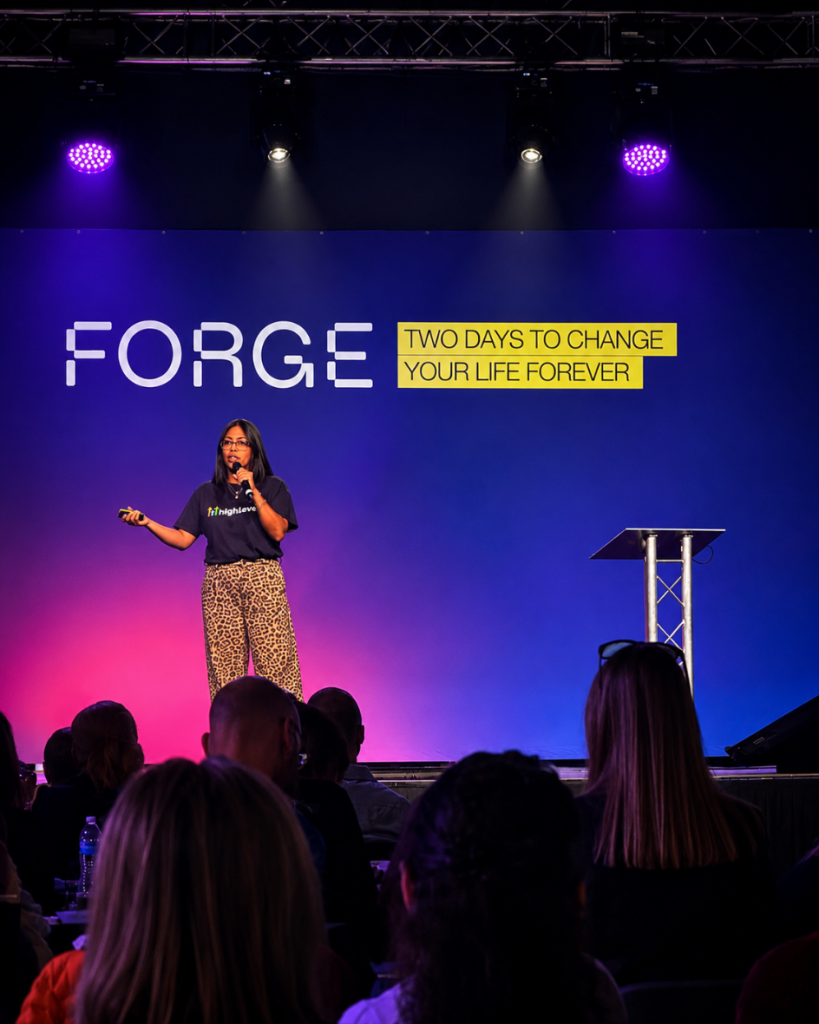
Kelsi Navalta
Kelsi’s session was immediately actionable. Her point on copy: calls to action need to feel urgent and low-risk at the same time. “Start planning your dream wedding today” lands differently to “speak to our wedding team”, it puts the customer in the driving seat and takes the pressure out of it.
On leads, she shared that 48% come in during off hours, and if you’re not responding within five minutes, competitors likely are. The question she left the room with is whether email is actually the right channel for out-of-hours enquiries, or whether text and WhatsApp deserve a proper place in the strategy.
Marcus Sheridan
Marcus made the case for transparency as a commercial strategy. Most businesses avoid talking about cost on their website or social channels, which hands the advantage to anyone willing to have that conversation first.
His approach isn’t to publish a price list, it’s to explain what affects cost, clearly and honestly. Name the variables. If you won’t give an exact figure, give a ballpark and explain what moves it up or down. He also pushed the idea of self-service tools: ways for potential clients to self-select or self-assess before they ever speak to a human. People value the feeling of being in control of a decision, and there’s something in that for almost every service business.
What We’re Taking Back
A full day of sessions tends to generate a long list. Ours includes being more direct about what our services include and what working with us actually looks like, thinking harder about where we show up and whether we’re being selectively visible or just busy, and reconsidering how we handle out-of-hours enquiries.