Your website might look great and read well – but if the technical foundations aren’t right, Google may struggle to find it, crawl it, or rank it.
Technical SEO is the behind-the-scenes work that makes your website visible to search engines. It’s not about keywords or content; it’s about making sure the structure, speed, and accessibility of your site give Google everything it needs to do its job.
In this guide, we break down what technical SEO actually involves, why it matters for your business, and how getting it right can make a real difference to your search performance.

What Does Technical SEO Include?
Technical SEO covers all the elements of your website that affect how search engines access, understand, and rank your pages. Unlike content writing or link building, these are mostly behind-the-scenes factors, but they are just as important.
The main areas of technical SEO include:
Crawlability and indexing
Your robots.txt file and XML sitemap tell search engines which pages they can access and which ones to prioritise. If these are misconfigured, Google may never find your most important pages.
Page speed
Page speed is a confirmed Google ranking factor. Slow-loading pages frustrate users and signal poor site health to search engines. Core Web Vitals are Google’s specific set of speed and user experience metrics that directly affect how your site is assessed.
Mobile SEO
Google uses mobile-first indexing, meaning it primarily looks at the mobile version of your site when deciding how to rank it. A mobile-friendly website is no longer optional.
HTTPS and site security
HTTPS is a basic trust signal for both users and search engines. Sites without a valid SSL certificate are flagged as insecure by browsers and are at a disadvantage in search rankings.
URL structure
Clean, logical URLs help search engines understand what each page is about and how your site is organised.
Internal linking
A well-structured internal linking strategy helps search engines discover pages across your site and understand the relationship between them.
Canonical tags
When the same or very similar content appears across multiple URLs, it confuses search engines and splits your ranking signals. Canonical tags tell Google which version of a page should be treated as the primary one.
Structured data and schema markup
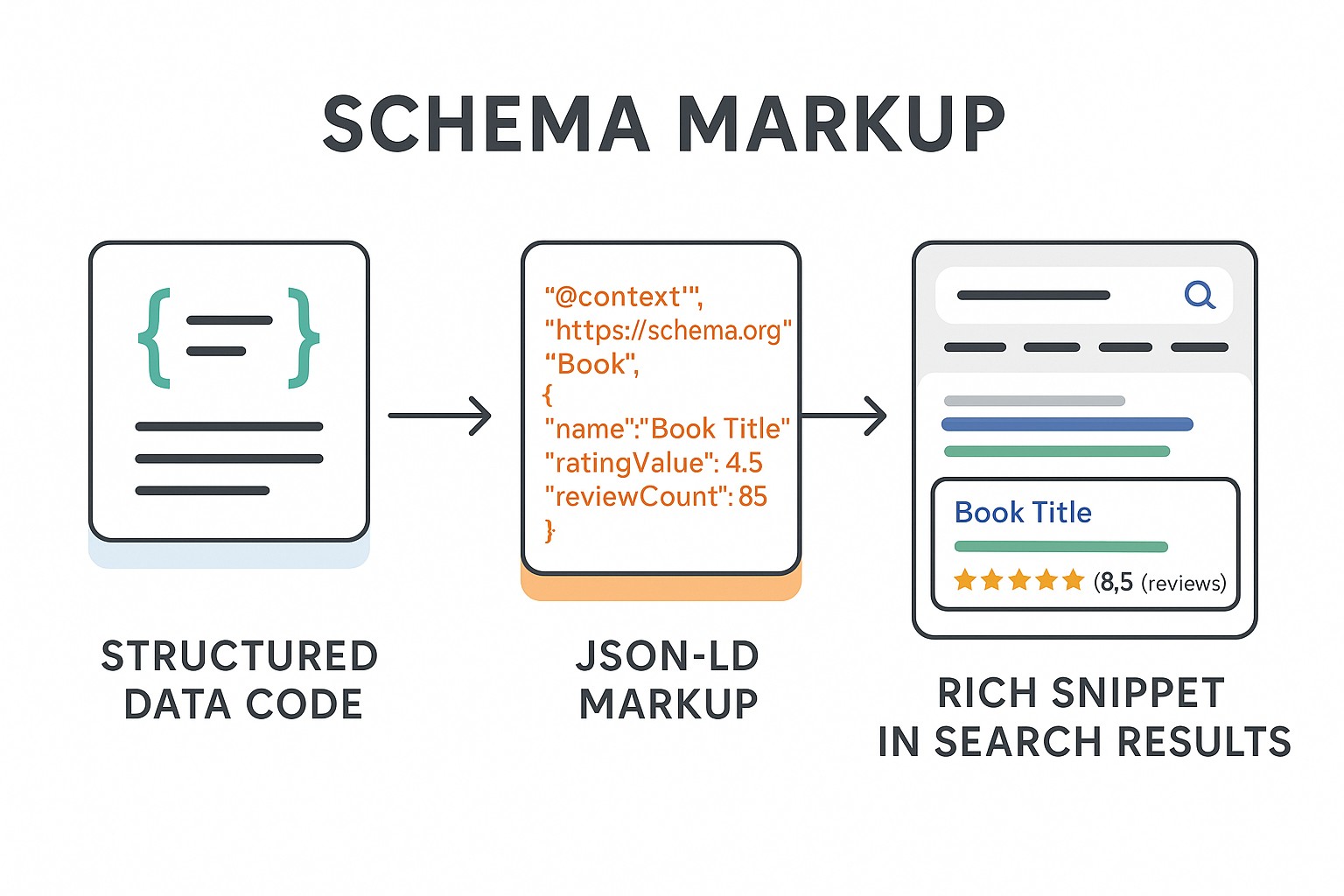
Adding schema markup to your pages helps search engines understand your content more accurately and can result in rich results such as star ratings, FAQs, and product information appearing in search.
Technical SEO is not a one-time fix. As your site grows and evolves, so do the technical requirements that keep it performing well.

Why Does Technical SEO Matter for Your Website?
The short answer: because without it, all the work you put into on-page and off-page SEO will not work as well as it should.
You can have excellent content, strong backlinks, and a well-designed website. But if search engines cannot properly access, crawl, and index your pages, all of that effort produces far less than it should. Technical SEO is the foundation everything else is built on.
Here is why it matters in practical terms:
It directly affects your search engine rankings
Page speed, mobile performance, and crawlability are all confirmed Google ranking factors. Getting them wrong puts you at a disadvantage against competitors who have them right.
It determines whether your pages are visible at all
A misconfigured robots.txt, an accidental noindex tag, or unresolved crawl errors can remove pages from search results entirely without any obvious warning sign.
It affects organic traffic
Sites with strong technical foundations rank more consistently, appear in more search features, and are better positioned to grow their organic traffic over time.
It supports every other part of your SEO strategy
Content performs better when it sits on a technically sound site. Backlinks carry more value when the pages they point to are properly indexed. Technical SEO amplifies the return on everything else you invest in.
It builds trust with users as well as search engines
A fast, secure, mobile-friendly website is not just good for rankings. It creates a better experience for every visitor, which means lower bounce rates and more conversions.
In short, technical SEO is what makes your website ranking on Google possible in the first place.

What Happens If You Ignore Technical SEO?
Technical SEO issues tend to build quietly. There is rarely a single dramatic moment where everything stops working. Instead, problems compound over time, and by the time you notice the impact on your traffic or rankings, the issues have often been present for months.
Here is what poor technical SEO can lead to:
Pages disappearing from search results
A misconfigured robots.txt file, an accidental noindex tag, or unresolved crawl errors can remove pages from Google entirely. Your website may look perfectly normal to a visitor while being partially or fully invisible to search engines.
Slow rankings growth
If Google is spending its crawl budget on low-value or broken pages, your important content gets crawled less frequently. New pages take longer to rank, and updates to existing content take longer to be picked up.
A drop in organic traffic
Technical issues that affect page speed, mobile performance, or Core Web Vitals can push your pages down the rankings – quietly reducing the organic traffic your site receives without any obvious explanation.
A poor user experience
Slow load times, broken pages, and insecure connections do not just affect rankings. They affect how real visitors experience your site. High bounce rates and low engagement send negative signals back to Google.
A Google penalty
In more serious cases – such as large volumes of duplicate content or manipulative redirects – Google can manually or algorithmically penalise a site, causing significant ranking drops that are difficult and time-consuming to recover from.
The longer technical issues go unaddressed, the more work is required to fix them. A site that has accumulated months of crawl errors, redirect chains, and indexing problems takes considerably more effort to recover than one that is audited and maintained regularly.

Is Technical SEO Something You Can Do Yourself?
The honest answer is: some of it, yes. But there are real limits to DIY SEO, and understanding where those limits are can save you a lot of time and wasted effort.
For small, straightforward websites, a business owner with some time and patience can make meaningful progress on technical SEO basics. There are free SEO tools available, including Google Search Console, that give you access to useful data about how your site is performing and where issues exist. If you are willing to learn, the fundamentals of technical SEO are not completely out of reach.
That said, there are good reasons why most growing businesses choose to outsource SEO rather than handle it in-house:
- Technical SEO is wide-ranging. It spans crawlability, indexing, page speed, structured data, mobile performance, site architecture, and more. Developing competence across all of these areas takes significant time and ongoing learning as Google’s standards evolve.
- Mistakes can be costly. A misconfigured robots.txt file, an incorrectly implemented redirect, or a canonical tag pointing in the wrong direction can actively harm your rankings. Unlike content, where a poorly written page is simply ineffective, a technical error can remove pages from search results entirely.
- The tools have a learning curve. SEO audit tools such as Screaming Frog and Google Search Console are powerful, but interpreting the data they surface and knowing how to prioritise fixes requires experience. Without that context, it is easy to spend time on low-impact issues while more serious problems go unaddressed.
- It takes time you may not have. For most business owners, the real question is not whether they could learn technical SEO, but whether the time investment is worthwhile compared to focusing on what they do best.
DIY SEO can be a reasonable starting point, particularly for very early-stage businesses working with tight budgets. But for businesses that are serious about growing their organic traffic and competing effectively in search, working with an SEO specialist is almost always the more efficient and effective route.

How Technical SEO Services Can Help Your Business
Technical SEO is one of those areas where professional expertise delivers a return that is difficult to replicate any other way.
When you work with a professional SEO services team, you get more than a list of fixes. You get a structured, prioritised approach that connects technical improvements to real business outcomes: more visibility, more traffic, and more enquiries from people actively searching for what you offer.
Here is what working with an SEO specialist marketing agency typically looks like in practice:
- A thorough technical SEO audit to establish exactly where your site stands and what is holding it back, with issues prioritised by impact rather than complexity.
- Clear, jargon-free recommendations that explain not just what needs fixing, but why it matters and what the expected outcome is.
- Hands-on implementation so that fixes are carried out correctly the first time, without the risk of new problems being introduced in the process.
- Ongoing monitoring and maintenance because technical SEO is not a one-time project. As your site grows, as Google updates its standards, and as new content is added, your technical foundations need to be kept in good shape.
- Integration with your wider SEO strategy so that technical improvements work alongside your content, link building, and local SEO efforts rather than in isolation.
At Arise, we are a Sheffield-based digital marketing agency with over 11 years of experience helping businesses get found online. Our technical SEO services are built around understanding your business first – what you do, who you are trying to reach, and what success actually looks like for you. From there, we build and maintain the technical foundations that give everything else you invest in SEO the best possible chance of performing.
Whether you are starting from scratch, recovering from a drop in rankings, or simply want to know where your site stands, we are here to help.
Ready to find out how your website is performing technically?
Get in touch with the Arise team today
Frequently Asked Questions
What is technical SEO?
Technical SEO is the process of optimising the behind-the-scenes elements of your website so search engines can properly crawl, index, and rank your pages. It covers site speed, crawlability, mobile performance, structured data, URL structure, and more. It is the foundation that every other part of your SEO strategy is built on.
What does a technical SEO audit include?
A technical SEO audit is a full review of your website’s health from a search engine perspective. It typically covers crawl analysis, indexing checks, page speed assessment, Core Web Vitals, mobile performance, robots.txt and XML sitemap review, duplicate content, and structured data. The output is a prioritised list of issues and recommended fixes, ordered by impact.
How much does technical SEO cost?
The cost of technical SEO services varies depending on the size of your website, the complexity of the issues found, and whether you need ongoing support or a one-off audit. At Arise, we offer a free initial SEO audit so you can understand exactly where your site stands before committing to anything.
Can I do technical SEO myself?
Some basics are manageable with free SEO tools like Google Search Console, particularly for small or straightforward websites. But technical SEO covers a wide range of interconnected elements, and mistakes such as a misconfigured robots.txt or an incorrect redirect can actively harm your rankings. For most businesses, working with an SEO specialist is a more reliable and time-efficient route.
How do I know if my website has technical SEO problems?
The most common signs are a drop in organic traffic, pages not appearing in Google search results, slow load times, or a spike in crawl errors flagged in Google Search Console. If any of these sound familiar, a technical SEO audit is the best place to start. Get in touch with our team at Arise to see exactly what is holding your site back.