If you’ve ever Googled something and wondered why certain websites appear at the top, and others don’t, you’ve already experienced SEO in action.
SEO, or Search Engine Optimisation, is one of the most powerful tools a small business can have. Yet for many business owners, it still feels like a mystery. What does it actually mean? How does it work? And why does it matter so much for your website specifically?
This guide answers all of those questions clearly, no jargon, no fluff, so you can understand exactly what SEO is and why investing in it could be one of the best decisions you make for your business online.
So, What Does SEO Actually Stand For?
SEO stands for Search Engine Optimisation. In simple terms, it’s the process of improving your website so that it appears higher in search engine results, like Google, when people search for products or services like yours.
Think of it this way: if someone in Sheffield types “best Italian restaurant near me” or “local plumber Sheffield” into Google, SEO is what determines whether your business shows up or whether your competitor does instead.
The goal isn’t just to get traffic to your website. It’s to get the right traffic: people who are actively looking for what you offer.
How Do Search Engines Work?
Before you can improve your SEO, it helps to understand what’s actually happening behind the scenes when someone performs a search.
Search engines like Google work in three stages:
Crawling
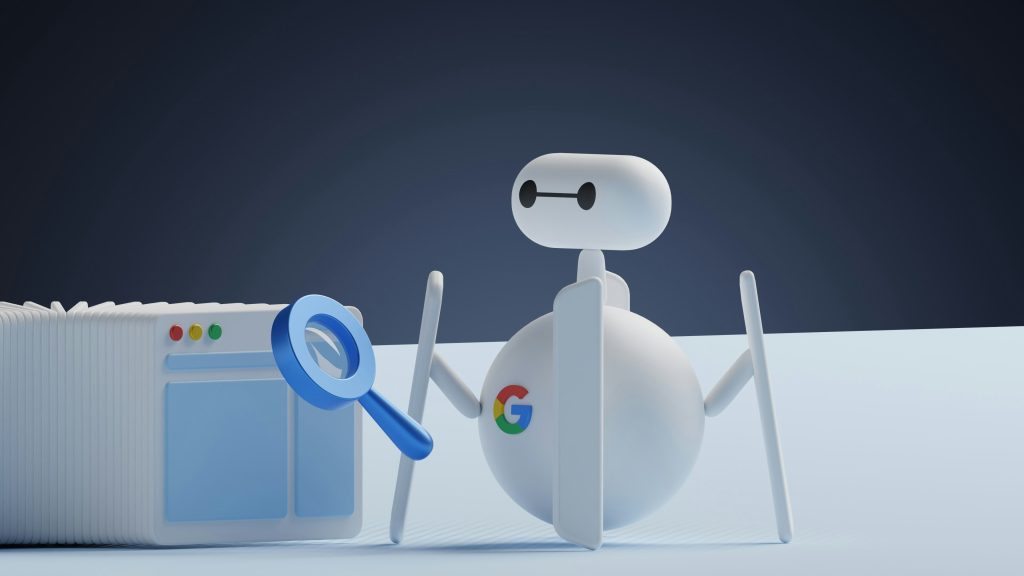
Google uses automated programmes called “crawlers” or “spiders” to browse the internet and discover web pages. They follow links from page to page, much like you might click through a website.
Indexing
Once a page has been crawled, Google processes its content and stores it in a massive database called the search index, essentially a digital library of billions of web pages.
Ranking
When someone types a search query, Google’s algorithm scans its index and ranks the most relevant, trustworthy pages for that query. The results you see on the page, from position 1 downwards, are the outcome of that ranking process.
Google uses over 200 signals to determine rankings, including the quality of your content, the speed of your website, how many other websites link to yours, and how well your pages answer the user’s query. According to Google’s own Search Central documentation, the goal is always the same: to connect users with the most helpful and relevant result possible.
Why Does SEO Matter for Your Business?
Here’s the short answer: most people never scroll past the first page of Google.
Research consistently shows that the top results on Google’s first page receive the vast majority of all clicks. If your business isn’t appearing there for relevant searches, you’re essentially invisible to a huge pool of potential customers.
Unlike paid advertising, where your visibility disappears the moment you stop spending, SEO builds long-term, organic visibility. Once your pages rank well, they can bring in consistent traffic month after month without an ongoing ad budget.
For small and medium-sized businesses in particular, that’s a significant advantage. You’re competing on the quality of your content and your website, not just the size of your budget.
That said, SEO and PPC work well together, and understanding the difference between the two is worth knowing. If you’re weighing up your options, our guide on SEO vs PPC breaks down when to use each.
The Three Pillars of SEO
SEO isn’t one single thing; it’s made up of three interconnected areas, each of which plays a role in how well your site ranks.
On-Page SEO
On-page SEO refers to everything you do on your website to make it more relevant and useful. This includes:
- Using the right keywords, the words and phrases your potential customers are actually searching for. Our post on how to add SEO keywords to your website effectively is a great starting point here.
- Writing clear, helpful page titles and meta descriptions
- Structuring your content with proper headings (H1, H2, H3)
- Making sure every page has a clear purpose and answers a real question
Off-Page SEO
Off-page SEO is about building your website’s authority and reputation in the eyes of Google. The primary way this happens is through backlinks, links from other reputable websites pointing to yours.
Think of backlinks as votes of confidence. The more quality websites that link to you, the more Google trusts that your content is worth showing to users.
Technical SEO
Technical SEO covers the behind-the-scenes elements that affect how easily Google can crawl, index, and rank your site. This includes:
- Page loading speed and mobile performance
- Core Web Vitals — Google’s set of metrics for measuring user experience
- A clean, logical site structure
- Fixing broken links and errors
If your website has technical issues, even the best content won’t rank as well as it should. This is one of the areas where having an experienced team, like Arise’s SEO specialists, makes a real difference.
What Is Local SEO and Do You Need It?
If your business serves customers in a specific area, a town, city, or region, then local SEO should be a priority.
Local SEO helps your business appear in location-based searches, such as “digital marketing agency Sheffield” or “web designer near me.” It also influences whether you show up in Google Maps results and the local “3-pack” that often appears at the top of search pages.
For businesses based in Sheffield and South Yorkshire, local SEO is often the fastest route to visibility. It involves optimising your Google Business Profile, building local citations, and making sure your website mentions the areas you serve.
It’s an area we focus on heavily for our clients at Arise — and one that consistently delivers results. Our work with Karl Benz Kitchens & Interiors is a good example: a 32% increase in organic traffic and position 1 rankings for key local terms.
On-Page SEO vs Off-Page SEO vs Technical SEO: Which Matters Most?
Honestly? All three. They work together, not in isolation.
A site with brilliant content but poor technical performance will struggle to rank. A technically perfect site with no backlinks will have limited authority. And a site with lots of links but thin, unhelpful content won’t satisfy Google’s quality standards.
The most effective SEO strategy addresses all three pillars consistently over time. If you want to understand how to approach this in a structured way, our guide on how to build a sustainable long-term SEO strategy walks through exactly that.
How Do You Measure Whether SEO Is Working?
SEO success isn’t just about rankings, it’s about whether those rankings are translating into real traffic and enquiries for your business.
The key metrics to watch include:
- Organic traffic — how many visitors are arriving via search engines
- Keyword rankings — where your pages appear for target search terms
- Click-through rate (CTR) — the percentage of people who see your listing and click it
- Conversions — enquiries, calls, purchases, or sign-ups from organic visitors
For a full breakdown of what these mean and how to track them, take a look at our post on key SEO metrics explained.
According to Moz’s Beginner’s Guide to SEO, understanding these numbers is what separates businesses that do SEO activity from those that actually get results from it, a distinction worth keeping in mind.
What About AI Search? Is SEO Still Relevant?
It’s a fair question. With tools like ChatGPT, Google’s AI Overviews, and other AI-powered search experiences becoming more common, some business owners are wondering whether traditional SEO still matters.
The short answer: yes, perhaps more than ever.
Google itself has confirmed that the fundamentals of good SEO, helpful content, strong authority, and a well-structured site are the same foundations that perform well in AI-powered search. The businesses that invest in quality SEO now are also the ones most likely to appear in AI-generated answers.
We’ve written about this in more depth in our post on Generative Engine Optimisation (GEO) and what Google’s latest AI guidance means for your SEO strategy, worth a read if you want to stay ahead.

How Long Does SEO Take to Work?
This is one of the most common questions we get, and the honest answer is: it depends.
For a brand-new website with no existing authority, you’re typically looking at 3–6 months before meaningful rankings begin to develop. For established sites with some existing traffic, improvements can come sooner.
What SEO doesn’t do is deliver overnight results. It’s a medium-to-long-term investment, and the compounding returns over time are what make it so valuable. A page that ranks well in month 6 can continue driving traffic for years, without you spending anything more on it.
The key is consistency: regular content, ongoing technical improvements, and a clear strategy. Which leads us neatly to the next question.
Can You Do SEO Yourself, or Do You Need an Agency?
Both are possible, and the right choice depends on your time, budget, and goals.
Many small business owners start with DIY SEO, writing blog posts, optimising their Google Business Profile, and making basic on-page improvements. There’s a lot you can do without specialist knowledge, and it’s worth starting somewhere.
However, as your business grows or your market becomes more competitive, SEO becomes more complex. Technical audits, backlink building, competitor analysis, and keeping up with Google’s algorithm updates all take time and expertise.
That’s where working with a specialist agency comes in. At Arise, we take a transparent, results-led approach to SEO — with full visibility into what’s being worked on and how it’s performing. And if we don’t deliver growth within three months, we refund 100% of our fees.
Ready to Improve Your Search Rankings?
SEO isn’t magic, but done right, it’s one of the most powerful ways to grow your business online. Whether you’re just getting started or looking to take your existing visibility to the next level, Arise can help.
Get in touch with our team today for a free discovery call, no obligation, just a conversation about what’s possible for your business.
FAQs About SEO
Is SEO free?
The traffic you earn through organic search is free — you don’t pay per click the way you do with Google Ads. However, good SEO takes time and expertise, so there’s usually an investment in either your own time or an agency’s fees.
How much does SEO cost?
This varies depending on the competitiveness of your market, the size of your website, and the level of support you need. Take a look at our pricing page for an overview of what to expect from Arise.
Can I do SEO myself?
Yes, especially at the early stages. Learning the basics of keyword research, on-page optimisation, and content creation can go a long way. But for competitive industries or faster results, professional support makes a significant difference.
Does my small business really need SEO?
If you want to be found online by people actively searching for what you offer, yes. Whether you’re a local service business, an ecommerce store, or a professional practice, SEO is one of the highest-return investments you can make in your digital presence.
What’s the difference between SEO and PPC?
SEO earns you organic (free) traffic over time. PPC (Pay-Per-Click) puts you at the top of search results immediately, but you pay for every click. Both have their place; find out more on our PPC service page.